



Tree disease diagnosis in Regina starts with a trained eye and systematic inspection. Mature maples, oaks and ash trees across Regina's post-war neighbourhoods and ravine lots face pressure from insects, cankers, root rot and environmental stress. Our ISA Certified Arborists examine the crown, trunk, root flare and soil to identify what is killing your tree, then deliver a written recommendation: treat the disease, prune to slow it, or remove the tree safely. Early diagnosis often saves a tree and protects your property and neighbours. Queen City Tree Trimming has been diagnosing and treating tree disease in Regina since 2016.
Why tree disease diagnosis matters in Regina
Trees in the Regina area face a harsh climate. Freeze-thaw cycles crack bark and expose wood to fungal infection. Summer windstorms and ice storms snap branches and create entry points for insects and disease. Ash trees across in Regina and the surrounding area are dying from the emerald ash borer, and early diagnosis determines whether injection treatment can save the tree or whether removal is the only option. A sick tree is a liability: weakened limbs fall without warning, roots fail silently, and disease spreads to neighbouring trees.
- We inspect the crown for wilting, dieback, unusual leaf colour and sparse foliage that signal nutrient stress or vascular disease.
- We examine the trunk and branch collar for cankers, cracks, bark damage and signs of boring insects.
- We probe the root flare and surrounding soil to detect root rot, compaction and girdling roots that choke the tree.
- We identify the specific pest or pathogen, then recommend treatment, pruning or removal based on the tree's age, species and location.
- We provide a written report with photographs and a clear action plan you can share with your insurer or the City of Regina if a permit is required.
Diagnosis stops guesswork. A certified arborist report protects your decision and documents the condition of the tree at the time of inspection.
Local insight: The emerald ash borer has killed thousands of ash trees across the Regina area since its arrival in in Regina and the surrounding area. Early diagnosis of ash trees showing crown dieback or D-shaped exit holes can determine whether injection treatment in late spring or early summer will save the tree, or whether removal is necessary to prevent branch failure.
How we diagnose tree disease in the Regina area
Our process is methodical and thorough. We arrive with binoculars, a hand lens, a probe and a camera. We examine every part of the tree and the soil around it. We ask about the tree's history: when did the symptoms start, has it been stressed by drought or construction, are neighbouring trees showing the same signs. We then write a report with our findings and recommend the next step.
- We climb or use a bucket truck to inspect high branches and the upper crown for dieback, cankers and pest damage.
- We use a probe to test wood density in the trunk and detect hollow sections or decay columns inside the tree.
- We examine the root collar at ground level for girdling roots, root rot and soil compaction.
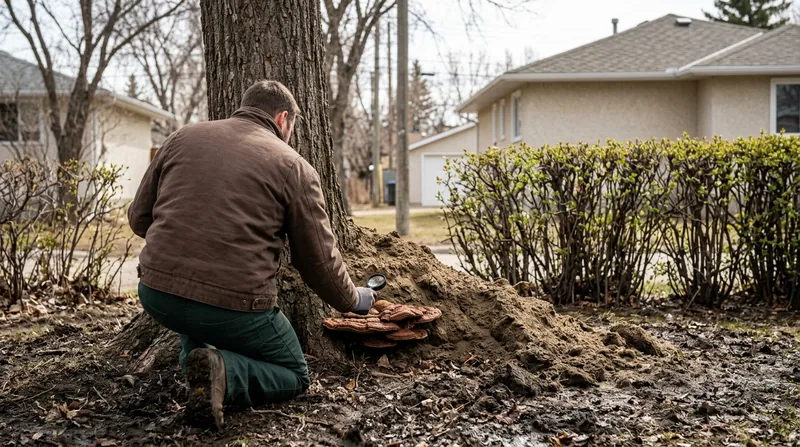
- We photograph the symptoms and take samples if fungal or insect identification is needed.
- We compile our findings into a written report with photographs, diagnosis and a clear recommendation for treatment, pruning or removal.
The report is yours to keep. Use it to apply for a tree removal permit from the City of Regina, to file an insurance claim, or to plan treatment with a certified arborist. See our arborist report and risk assessment service for more detail on what a professional inspection includes.
Real example: A homeowner in Cathedral noticed their 60-year-old silver maple losing branches each summer and developing large cracks in the trunk. Our arborist diagnosed internal decay from a wound that had never healed properly, plus root girdling from a buried landscape tie. The tree was beyond treatment. The report supported a permit application, and removal was completed within two weeks. Stump grinding followed, and the site was clear for replanting.
Diagnosis methods and what they reveal
| Method | What it detects | When we use it |
|---|---|---|
| Visual crown inspection | Wilting, dieback, sparse foliage, unusual leaf colour, dead branches, pest damage visible from ground or canopy | Every diagnosis; performed from the ground first, then from height with binoculars or by climbing |
| Trunk and bark examination | Cankers, cracks, bark damage, sunscald, boring insect exit holes, oozing sap, fungal fruiting bodies | All inspections; closer inspection of problem areas with a hand lens |
| Resistance drilling and probing | Internal decay, hollow sections, wood density loss, the extent of decay inside the trunk | When hollow sound or visible cracks suggest internal rot; helps determine if the tree can support its own weight |
| Root collar and soil assessment | Root girdling, root rot, soil compaction, buried landscape fabric, poor drainage, signs of construction damage | All inspections; we carefully expose the root flare if soil is covering it |
| Pest and pathogen identification | Emerald ash borer, Dutch elm disease, canker fungi, root rot pathogens, scale insects, borers, mites | When symptoms point to a specific pest or disease; samples may be sent to a laboratory for confirmation |
Common tree diseases in the Regina area
in Regina and the surrounding area's climate and tree species create predictable disease patterns. Silver and sugar maples are prone to verticillium wilt and anthracnose in wet springs. Oaks suffer from oak wilt and canker diseases. Ash trees are being decimated by the emerald ash borer. Birch trees face bronze birch borer and leaf spot diseases. Spruce and cedar are susceptible to root rot in poorly drained soils. Our arborists recognise these diseases on sight and know which ones can be treated and which require removal.
- Emerald ash borer kills ash trees by tunnelling under the bark and disrupting water and nutrient flow; injection treatment works best on trees caught early, before crown dieback exceeds 30 per cent.
- Dutch elm disease spreads through root grafts between neighbouring elms and through bark beetles; infected trees must be removed and the stump treated to prevent regrowth.
- Verticillium wilt clogs the vascular system of maples and causes sudden wilting and branch dieback; there is no cure, but pruning and care can extend the tree's life.
- Root rot from Armillaria or Phytophthora weakens the root system and causes slow decline; diagnosis requires soil assessment and sometimes root excavation.
- Canker diseases create sunken wounds on the trunk and branches, gradually girdling the branch until it dies; some cankers are manageable with pruning, others signal the tree's decline.
Early diagnosis of any of these conditions gives you options. Contact us for a free estimate and let our ISA Certified Arborists assess your tree.
What happens after diagnosis
Your written report will recommend one of three paths: treatment, pruning and monitoring, or removal. Treatment might include injection for emerald ash borer, fungicide application, or soil amendment to address nutrient deficiency or compaction. Pruning removes dead wood and improves air flow through the crown, slowing disease spread. Removal is recommended when the tree is beyond recovery or poses a safety risk. If removal is needed, we handle that work directly. See our services for tree removal in Regina, stump grinding, and deadwood and branch removal.
If the City of Regina requires a permit for removal, your arborist report supports the application and often speeds approval. We can help you file the permit and coordinate the removal timeline. If your tree is covered by an insurance policy, the report documents the condition and damage, making a claim clearer.
Seasonal timing for tree disease diagnosis
Tree disease diagnosis can happen any time of year, but the best window is late fall through early spring when trees are dormant and the crown is bare. Without leaves, we see the branch structure clearly and spot dead wood, cankers and pest damage more easily. Spring and summer diagnoses are equally valid, but leaf cover can hide some symptoms. If your tree is showing obvious signs of distress (wilting, oozing sap, large dead branches), we respond immediately regardless of season.
If treatment is recommended, timing matters. Emerald ash borer injection is most effective from late spring to early summer, when the tree is actively growing and can move the insecticide through its vascular system. Pruning to remove dead wood and improve air flow is best done in late fall to late winter, during dormancy. Removal can happen year-round, though we avoid work during active construction or when ground conditions are too soft.
Call (639) 739-5703 to schedule a diagnosis. We respond to urgent requests within 24 hours.
Prices Tree Disease Diagnosis in Regina — Indicative pricing
| Service | Price | Details |
|---|---|---|
| Tree disease diagnosis (standard) | From $150 | Single tree inspection, crown to root, written report with photographs and recommendations |
| Tree disease diagnosis (multiple trees) | From $275 | Two to four trees on the same property, combined report |
| Arborist report with risk assessment | From $200 | Detailed inspection, structural analysis and permit support for the City of Regina |
| Pest or pathogen lab analysis | From $75 | Sample collection and identification if visual diagnosis is unclear |
| Travel | Included | No charge for service calls in Regina and the surrounding municipalities |
| Free estimate | Free | Call (639) 739-5703 or request online; response within 24 hours |
Indicative prices; free, personalized estimate within 24h at (639) 739-5703.